
WHY ME? Inside a Last-Minute System of a Down Tribute Show
On Friday, September 4th, 2026, I was invited to see a System of a Down tribute show.
From what I was told—which wasn't much, and the invite only came two days in advance—a couple of Hawaiʻi-based bands were putting the show together to celebrate the 25th anniversary of System of a Down's Toxicity, and they wanted me to come review it.
This is the story of my own experience before, during, and after the show.
WHY ME?
The idea was easy enough.
Show up. Talk to the bands. Watch the show. Leave. Write about my experience.
Simple.
Except I still had a lot of questions about what exactly was expected of me.
The biggest one was one that I still haven't completely answered:
Why me?
You, the reader, may know me as Lawerence Edward Linton III, the founder of a growing Hawaiʻi streetwear brand called LOWLIFE and the writer behind LOWLIFE's blog, The LOWDOWN. I've written philosophy for The LOWDOWN, interviewed upcoming musicians like Zoe Roarz, and tried to turn LOWLIFE into a platform where artists can get exposure for their work without needing a huge following or passing through some kind of gate.
That may all be true, but I'm still just a regular guy.
A college student, actually.
I love what I do, but I don't consider my opinion influential enough that I would expect a promotion company to reach out to me and ask me to review a show.
So when I first saw the email inviting me to the event, I was convinced it was some kind of scam.
I spoke with the promoter who contacted me and proceeded to bombard her with what was probably an annoying amount of questions.
"What's the lineup?"
"What do you hope to gain from me reviewing this show?"
"What's the creative direction of the article you want me to write?"
"Could I get backstage access?"
These were the kinds of things that, at the time, I felt like I needed to know.
The more information I had, the more I could prepare.
The more I could prepare, the better the article would be.
At least, that's what I thought.
Hindsight being what it is, I can now see that I was overthinking the ever-loving fuck out of it.
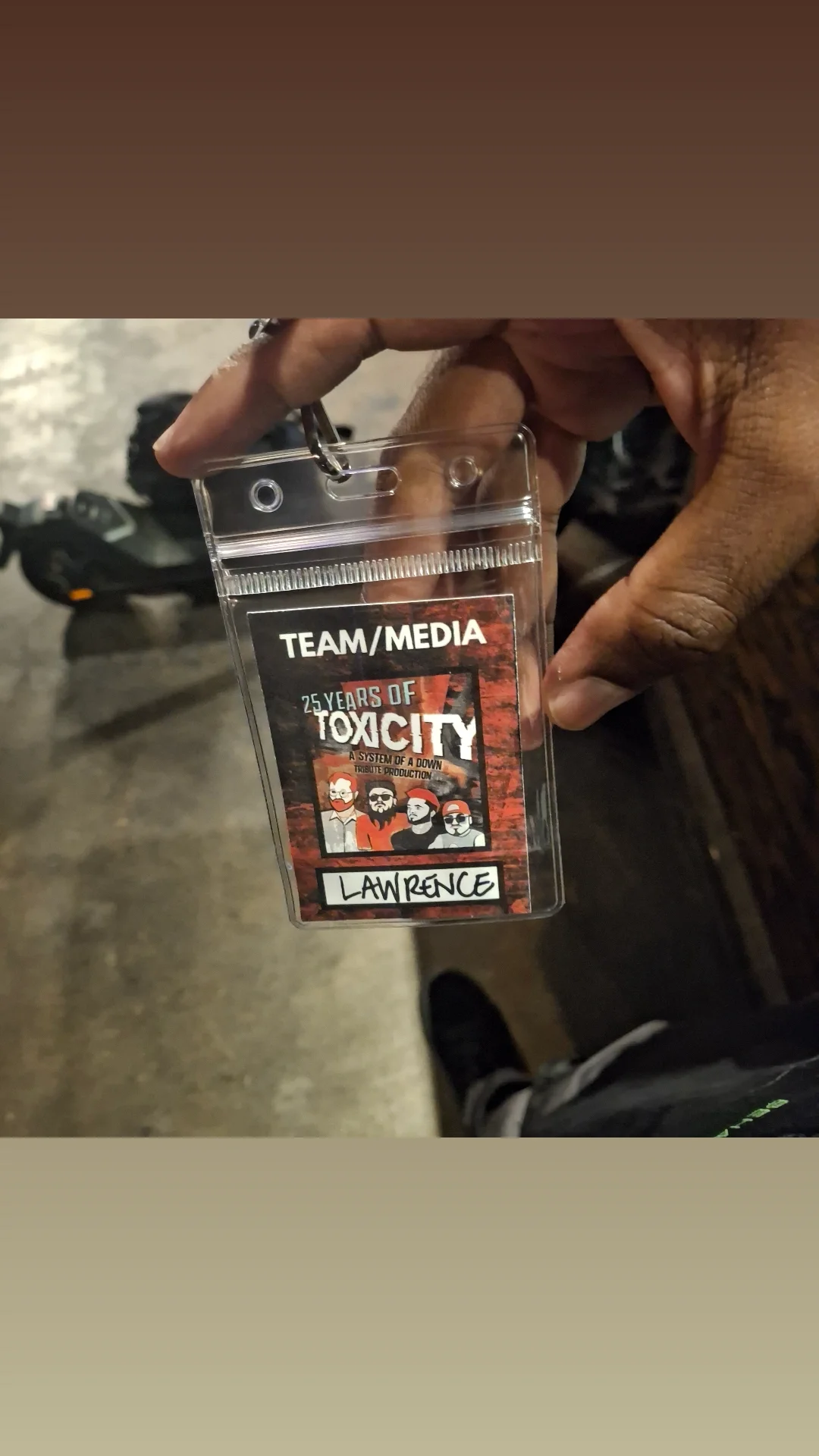
They always forget the extra E after The W :(
BEFORE THE SHOW
The day of the show, I was told I could come to the venue early while the bands were doing soundcheck.
The venue was The Republik, a large concert venue near Waikīkī. Even before entering the building, I could feel the sound system through the walls. The bass and drums rattled my chest from outside.
The place was a brick building.
I had a whole speech planned out for the Uber ride there. I rehearsed it out loud like an anxious prayer: who I was, why I was there, what LOWLIFE was, what The LOWDOWN was about, and why I was interested in covering the show.
Again, overthinking the ever-loving fuck out of this.
How much of that speech did I actually give when I arrived?
Not a single word.
Instead, I found myself pacing around the mostly empty venue with a media badge hanging around my neck, taking notes on my first impressions.
There was something strangely surreal about it.
I was standing on the other side of the barrier now—not as someone who had simply bought a ticket and showed up, but as someone who had been invited to document the experience.
I looked out across the wide-open dance floor and imagined the insane mosh pit that was bound to break out later that night.
Then I started talking to the bands.
Those conversations gave me some context for what I was actually witnessing.
The first thing I wanted to know was:
Why System of a Down?
I spoke with a man named Kawaiola, the lead singer of The Kombucha Mushroom.
The entire show had been his idea.
He told me that System of a Down's lead singer, Serj Tankian, had been one of his childhood idols and had inspired him to sing himself.
Then I learned something else.
The entire show had been put together and promoted in less than a month.
For The Kombucha Mushroom and Da Kine Bizkit, it would also be their first-ever show.
That changed the way I looked at the whole thing.
Here was Kawaiola, a musician who had been inspired as a kid by a band he loved, deciding to put together a last-minute show to honor the 25th anniversary of the album that helped make System of a Down a worldwide name.
It wasn't some giant production backed by a massive organization.
It was somebody saying, "I love this music, it meant something to me, and I want to do something with that."
I couldn't help but respect that.
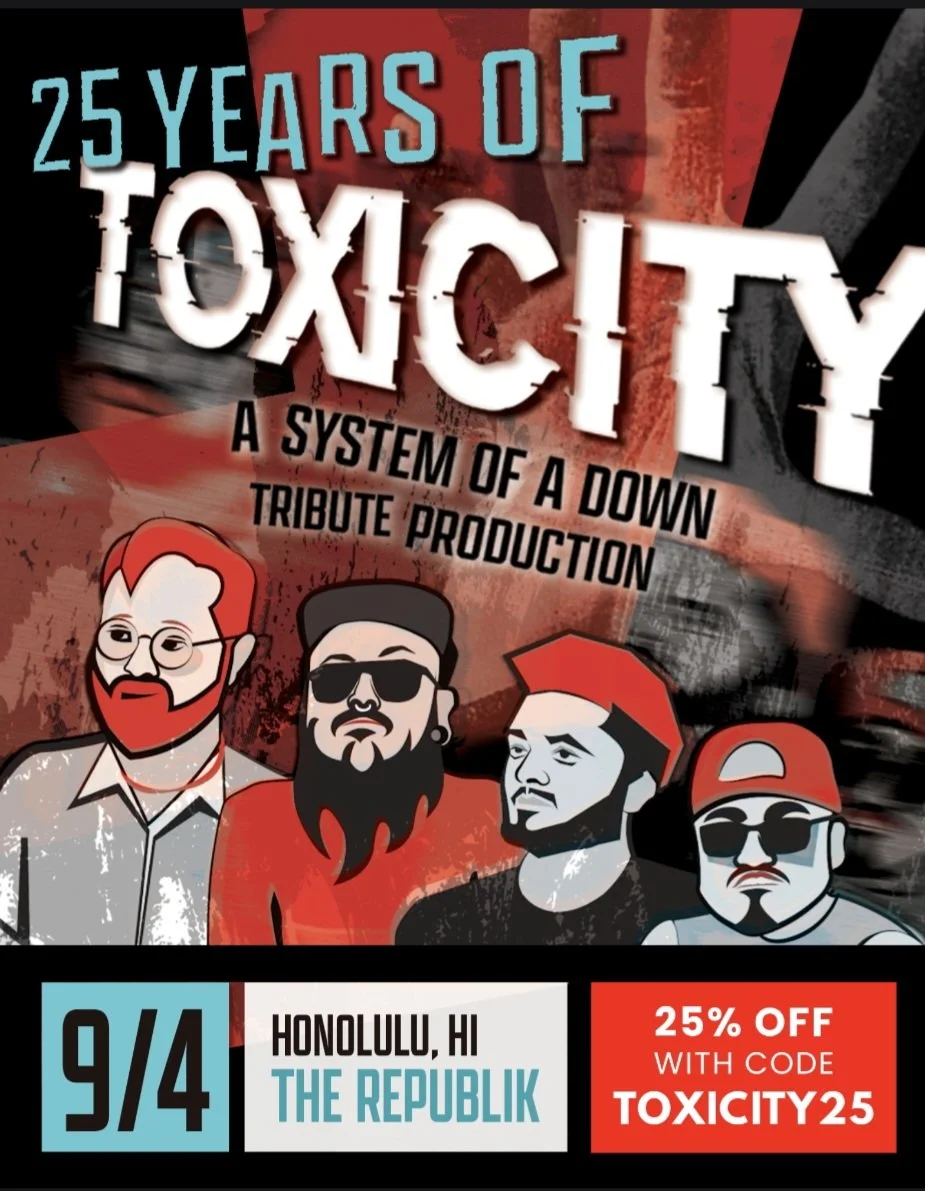
The Flyer for the Show. I was wrapping up the ZOE Roarz article when I first got the email for this.
THE CROWD
Eventually, the crowd began trickling into the venue.
A few people at a time.
Then a few more.
But to my surprise, the crowd never really grew that much. I had intentionally positioned myself where I could see the entrance, and it seemed like there was a point fairly early in the night where people simply stopped coming in.
Something else immediately caught my attention.
There were children.
Actual children.
I saw a woman holding a baby, along with several other kids who looked like they weren't even ten years old yet.
I had mixed feelings about this.
On one hand, even a blind man could see how small children and mosh pits are a recipe for disaster.
So when I saw kids in the crowd, I assumed one of two things would happen: either there would be no mosh pit at all for safety reasons, or the parents would keep their children far away from it if one broke out.
At the same time, I'll admit that the idea of some seven-year-old kid learning how to headbang from their parents, who probably grew up listening to System of a Down, Paramore, and Limp Bizkit, made me smile.
And a little jealous.
After all, it's never too early to become a metalhead.
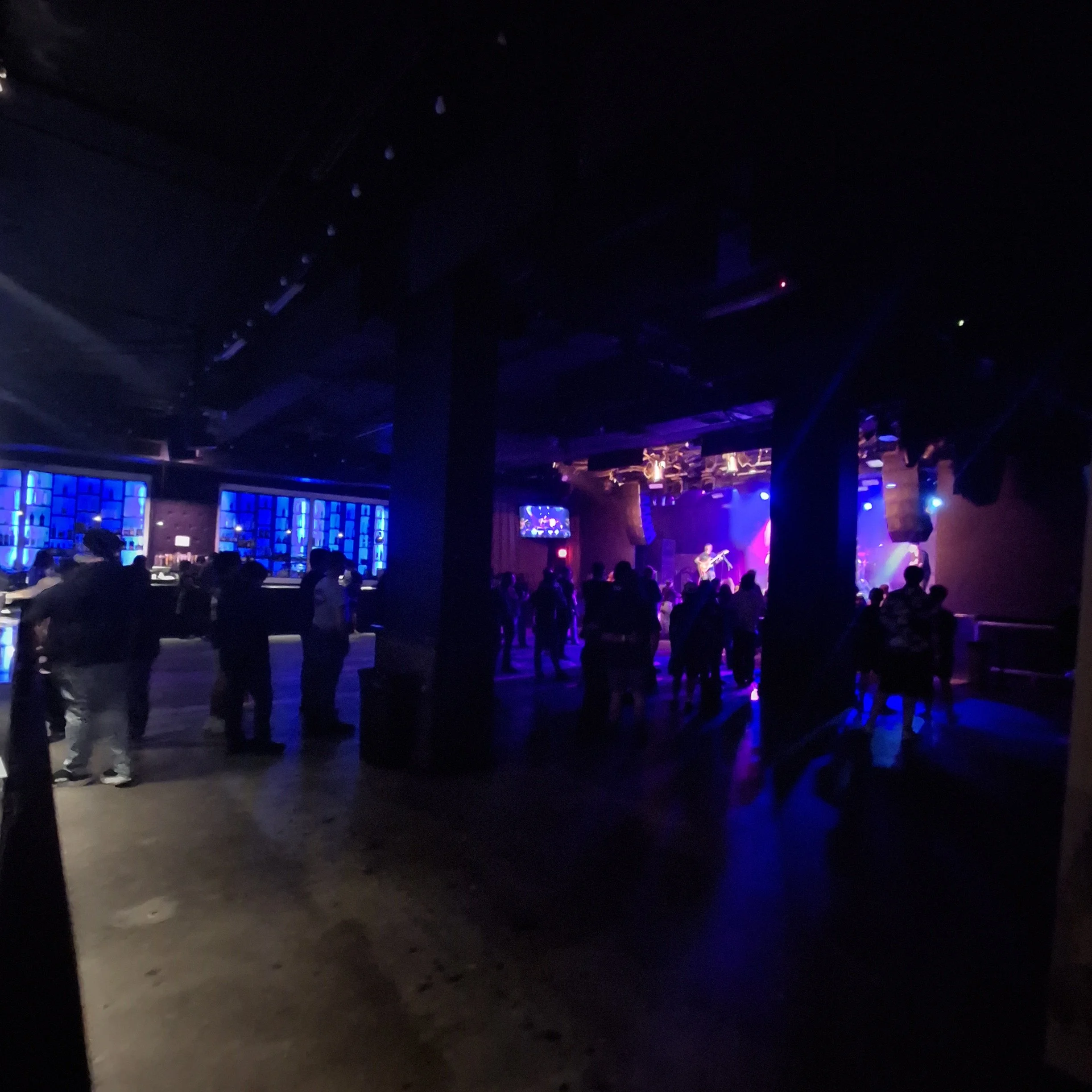
This was as big as the crowd got the entire night
THE MUSIC
The first band to take the stage was Paramore-ish.
Someone had told me earlier that this wasn't even a real band in the traditional sense. It was essentially a group of people who had come together specifically to play Paramore covers that night.
I had a hard time believing that once they started playing.
Damn, they were good.
The vocalist had a great voice and stage presence—the kind that didn't demand attention but naturally drew it.
She hit every note, including the high ones, which had me raising my eyebrows like:
"How the hell did she do that?"
The drums hit me in the chest like the recoil of a fired shotgun and synchronized seamlessly with the bass.
But the best part was that it was obvious everyone was having a good time.
And I think the crowd felt that.
I definitely did.
Next came Da Kine Bizkit, who played Limp Bizkit covers.
I'll confess: before that night, I had never really listened to Limp Bizkit.
Break Stuff is a relatively recent addition to my gym playlist after that night, and that's about the extent of my knowledge.
This was my favorite performance of the night.
The bars were sick and delivered with an aggression that was clearly influenced by hip-hop but blended seamlessly with the rock instrumentation. The rhythms were infectious, and before long, the entire crowd was headbanging.
Damn, I wish I had long hair.
I actually didn't realize they were a cover band at first. They played each song with the kind of familiarity that made it seem like they had written the songs themselves.
Then came The Kombucha Mushroom.
Kawaiola's band.
They played System of a Down's entire Toxicity album, and they played it with genuine passion.
Kawaiola stole the show.
He moved with an intensity that seemed to come from somewhere deeper than simply performing songs. He sang every word like it was a personal thank-you to Serj Tankian for the effect System of a Down had on his life.
At one point, Kawaiola's face was bright red.
Whether it was from the intensity of the performance or the fact that he was rapidly running out of oxygen, I couldn't tell.
The guy's head practically glowed under the stage lights.
And I swear, if you stood in the front row and looked closely enough, you could see tears just begging to escape his eyes.
Watching him perform made the entire story behind the show feel real.
This wasn't just somebody playing System of a Down songs.
This was somebody paying tribute to the music that helped shape him.
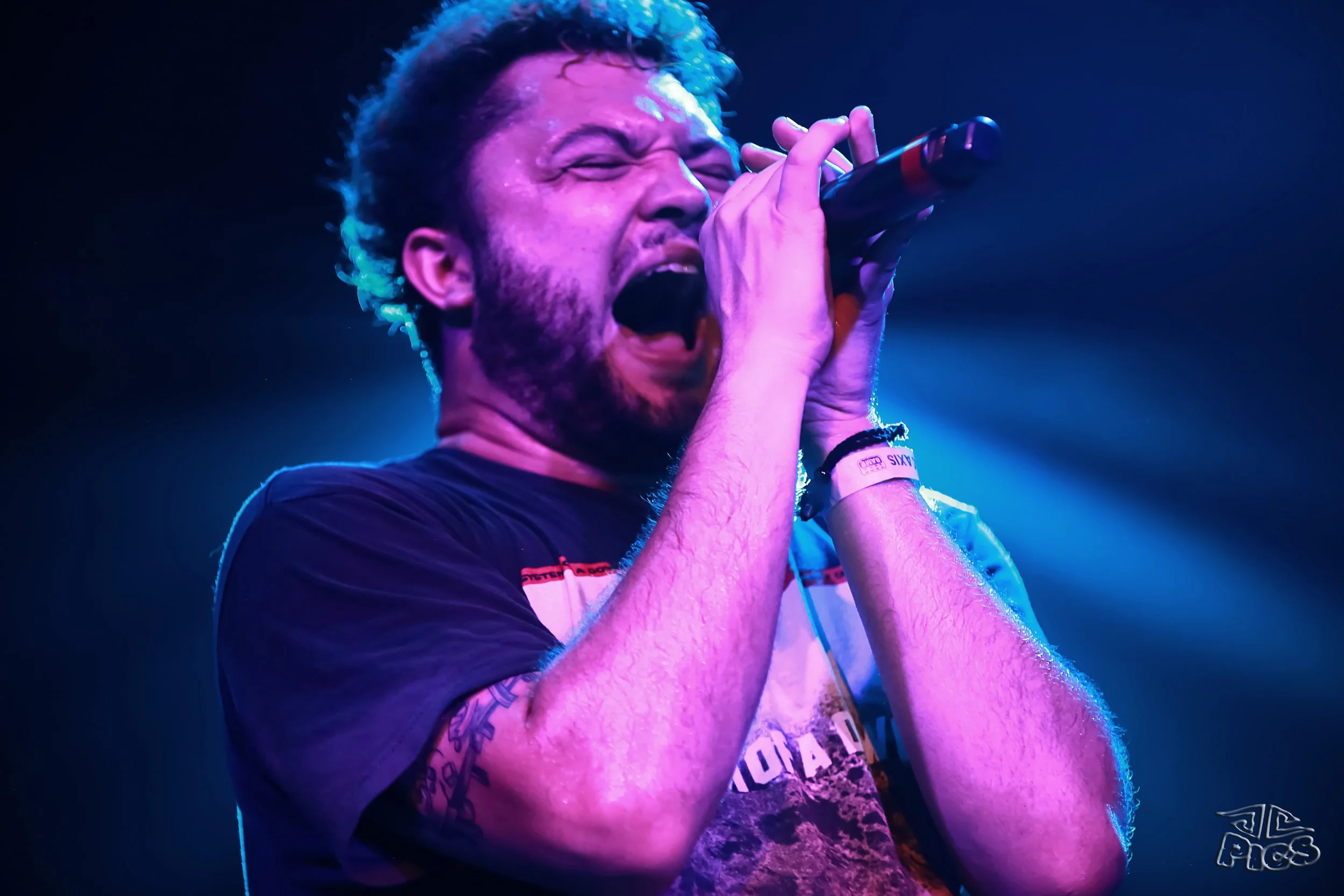
Kawaiola , from The Kombucha Mushroom. HOW this guy was breathing as he sang like this for an hour is a mystery to me
THE MOSH PIT
I honestly wouldn't call what I saw a mosh pit.
It was more like a mosh puddle.
Every once in a while, a small circle would form for a few minutes before disappearing again.
Nobody was really throwing elbows. Nobody got knocked down. There was none of that very specific endorphin rush you get when you're being violently pinballed around a tightly packed mass of strangers.
I'll admit, I was pretty annoyed.
If I had actually paid to get into the show expecting a hardcore pit, I would've been Pissed OFF.
But at the same time, I understood it.
There were kids in the audience.
The last thing anyone wanted was for Little Timmy to fall at the wrong moment and get accidentally dogpiled by a bunch of adults.
So instead, there was some light moshing, plenty of headbanging, and a lot of two-stepping.
And honestly?
It was pretty cool.
It was also pretty funny watching kids dance alongside their parents, completely lost in the music.
Talk about a core memory.
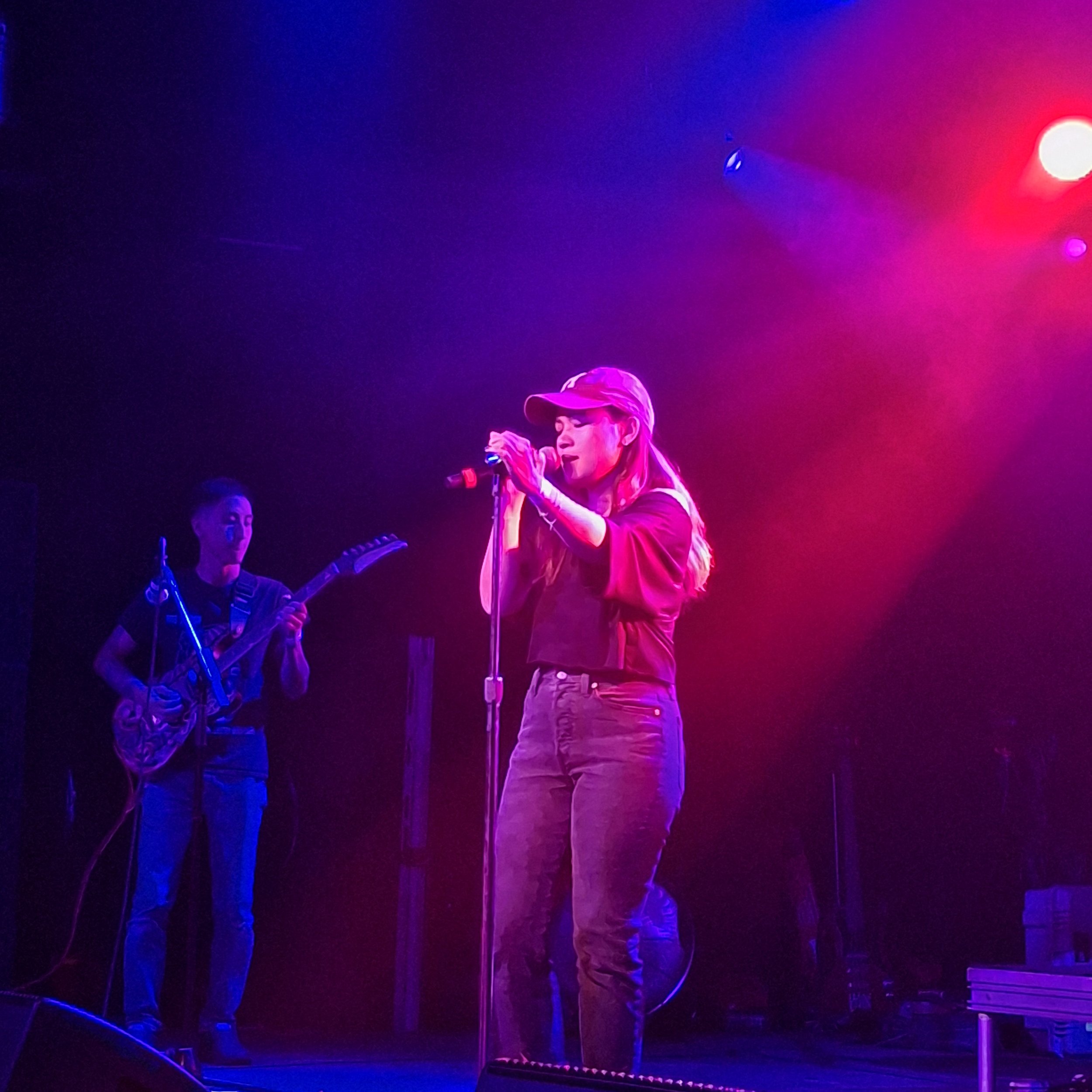
The lead singer from Paramore-Ish. Didn’t get her name.
REFLECTION
So what did I think about the show overall?
Honestly?
It wasn't the best show I've ever been to.
The idea behind it was honorable. The performances were great. But the show itself left a lot to be desired.
The biggest issue was probably the size of the crowd.
There simply weren't that many people there, and I do think the size and energy of an audience can have a huge effect on the atmosphere of a show.
I also couldn't help but wonder whether the event might have turned out differently if it had been organized further in advance, promoted for longer, and started later than 6 p.m. on a Friday.
I also think the flyer could have been clearer about what kind of event people were walking into.
If you're advertising a System of a Down tribute show, some people are going to assume they're walking into a chaotic metal show where the dance floor turns into a human blender.
That wasn't this.
And that's okay.
If you wanted to spend your Friday night listening to some dope covers of legendary rock bands in a small, lively, relatively chill atmosphere, I'd say come.
If you wanted a full metalhead experience complete with mosh pits that look less like dancing and more like brawling without punches, and music so charged with aggressive, wild, FUCK YOU energy that it makes you feel like you could headbang your way through a concrete wall, I'd suggest you go somewhere else.
It was a good show.
I had fun.
There was just a lot left to be desired.
But I don't regret going.
Because somewhere between the anxious Uber ride, the media badge hanging around my neck, the conversations with the bands, the kids dancing with their parents, the mosh puddle, and Kawaiola screaming every word of Toxicity like his life depended on it, I realized something.
I had spent the entire week trying to figure out why they had invited me.
I still don't know.
But I showed up.
I listened.
I watched.
I asked questions.
I had some fun.
And for one Friday night, I got to witness a story unfold in front of me.
No regrets.
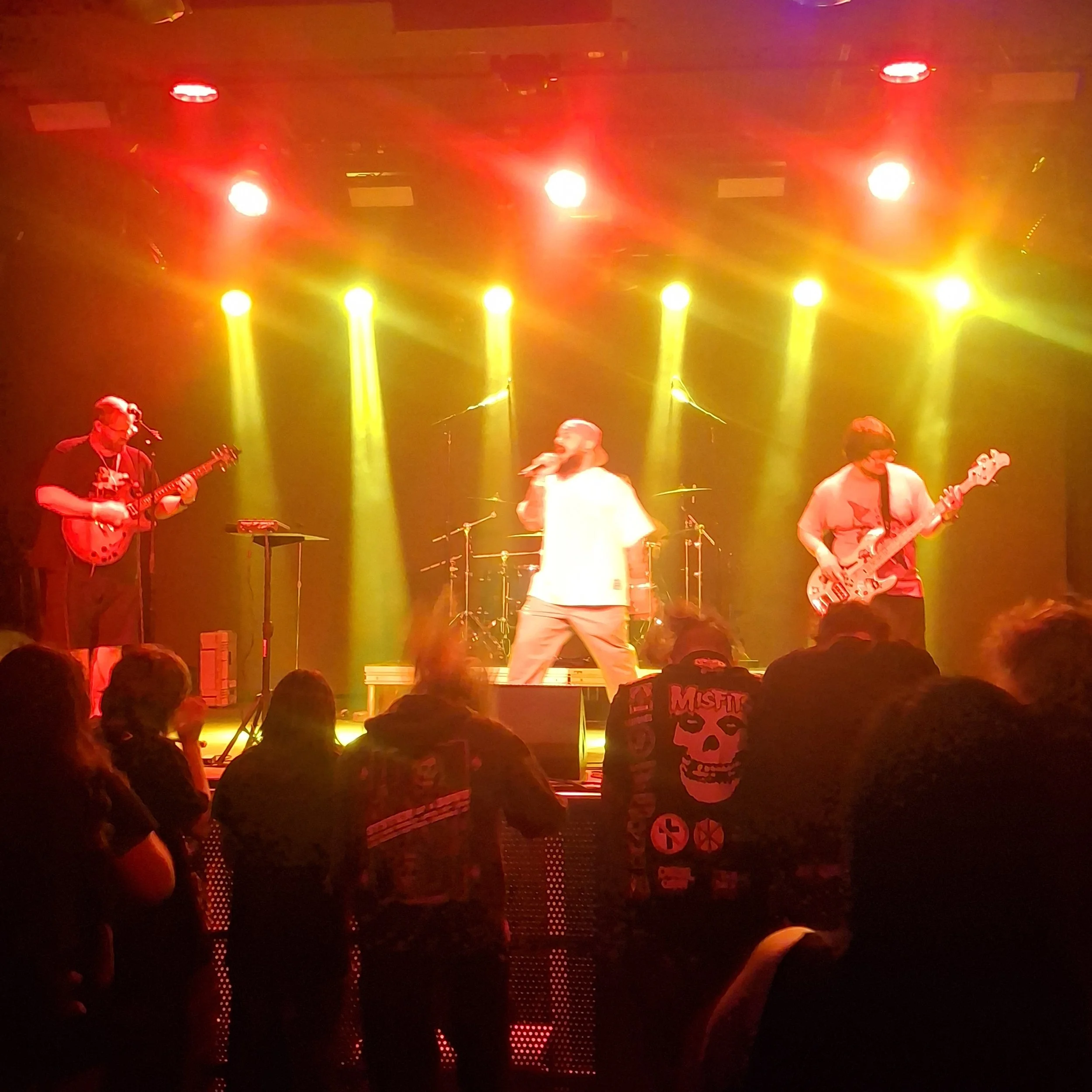
Da Kine Bizkit Kicking ass during their set
Thank You for reading
WANT TO CHALLENGE A LABEL?
LOWLIFE is currently hosting the CHALLENGING LABELS art contest.
We're asking artists to create work that questions the labels, stereotypes, identities, and expectations placed on ourselves and others.
Every artist who submits a piece will have their work featured in the upcoming CHALLENGING LABELS virtual gallery.
And the winning artist will receive a Behavior IssUES shirt set (our upcoming collection)
+
a personal review of their work from LOWLIFE founder LawErence Edward Linton III.
