
BEHAVIOR ISSUES
Lawerence here, founder of LOWLIFE.
With the Challenging Labels Art Contest officially open for submissions, I figured it was time to explain the prize. After all, what's a contest without something shiny at the end—something many will compete for, but only one person will walk away with, along with the inevitable bragging rights?
The winner of the Challenging Labels Art Contest will receive three things:
$100, a personal review of their artwork written by me, the founder of LOWLIFE, which will have a permanent spot on our blog, The LOWDOWN, alongside some of our most popular articles, including the Zoe Roarz interview and our System of a Down show review.
On top of that, the winning artist will receive a free box containing the full Behavior Issues Collection.
This collection has been in the works for over a year now, and I couldn't think of a better way to introduce it to the world than by giving the first full set to an artist who, by vote of the people, deserves it.
Now, I'm not stupid. I know most people who enter probably won't give a damn about the review or the Behavior Issues box. They'll probably care about the $100.
And that's perfectly fine.
Truth be told, if I were entering this contest, I'd just want the money too. I wouldn't give the slightest fuck about some random fucktard writing about my art for a lame ass blog. Or some stupid ass T shirts that are just going to end up as a last minute birthday gift for someone because they're from a brand I hadn't even heard of until now.
But before those T shirts end up in your trash bin, I want to at least explain why they exist in the first place.
After that, do what you will if you win them.
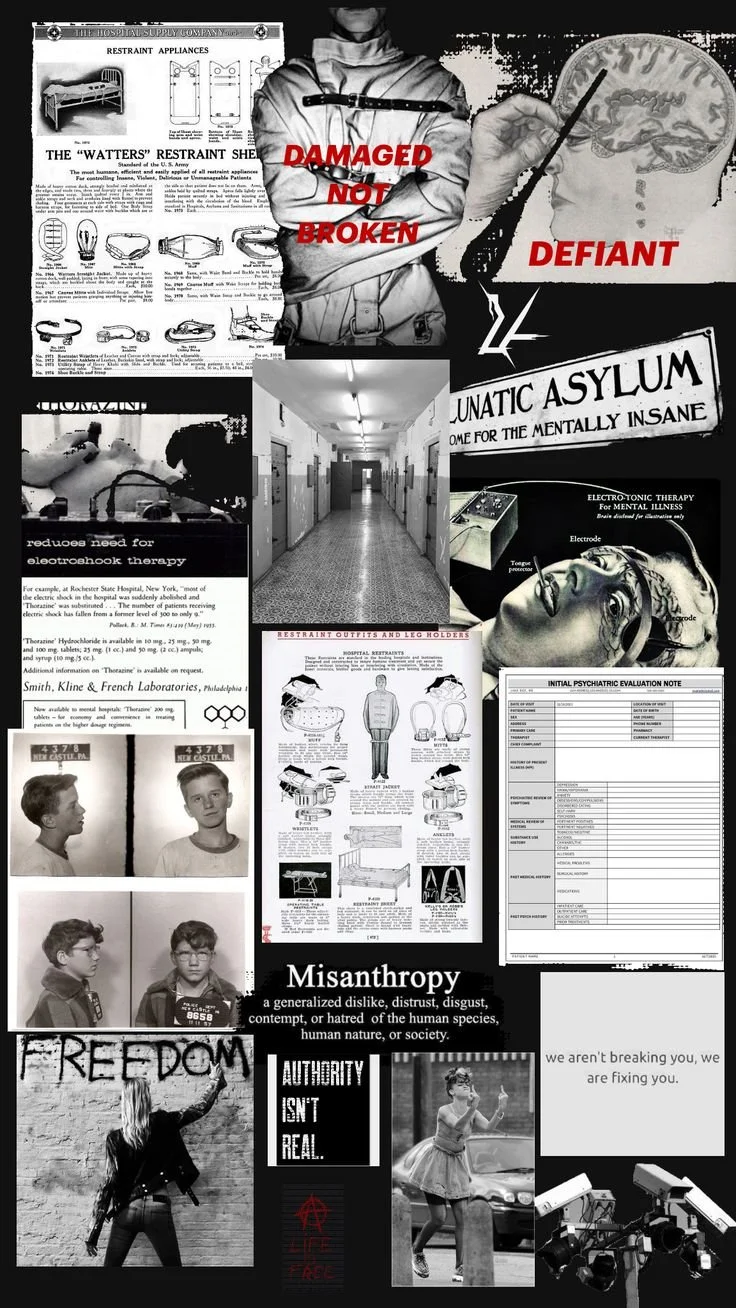
The mood board for the Behavior Issues Collection
WHAT IT MEANS
When you hear the words “Behavior Issues,” what comes to mind?
Maybe it's a child throwing a tantrum. Maybe it's a person in a mental hospital sitting in the corner of a padded room wearing a straight jacket.
The underlying theme in both scenarios is the same:
Labeling without context.
The child is seen as having “behavior issues” because, in that moment, an outside observer sees them being unruly. That observer can't feel the anger the child is experiencing. They don't know what happened before the outburst, what the child is thinking, or what their inner world looks like.
The person in the mental hospital is similarly labeled because an outside observer has determined that, for whatever reason, this person isn't “normal” compared to the rest of society.
Just like the child, the observer sees the behavior but not the context.
And this happens constantly.
Most people rarely stop to ask why something is the way it is. The human mind naturally likes shortcuts. A + B = C is much easier to mentally process than A + B + G − Y ÷ W = X.
Judgment is easy.
Understanding, however, takes time. It requires patience, curiosity, and work.
Not many people are willing to do that work for every unfamiliar thing they encounter. In fairness, we all have a finite amount of time and energy, so simplifying the world around us is understandable.
The problem begins when those shortcuts become judgments—and those judgments influence how we treat other people.
That's where Behavior Issues comes from.
I designed this collection because it's a collection I wish existed when I was young.
I know what it's like to be labeled simply because I didn't fit what was considered normal in the environment around me. In school, my teachers would constantly tell me to “tone it down” because I was more lively and animated than they preferred.
I heard similar things in the Army. Someone relatively high in my chain of command once looked at me and after a disrespectfully invasive series of questions and comments straight up asked me in front of many other leaders in my company:
“Do you not think there's something wrong with you?”
I'll never forget that.
Even within my own family, I grew up hearing things like “asshole,” “greedy,” “stupid brat,” and plenty of other names.
Imagine being sixteen years old and hearing your own dad—the man you once saw as something close to a superhero—regularly call you an asshole. Or hearing him tell you, to your face, “If we weren't family I wouldn't fuck with you.”
Not once.
Twice.
I'm not saying all of this to vent.
Well... maybe a little bit.
But more importantly, I'm saying it because I know what it's like to be misunderstood. I know what it's like to have people look at the way you act and decide that something is wrong with you without ever taking the time to understand why you are the way you are.
I never hurt anyone physically. I never broke any laws. Yet it seemed like no matter what I did, even just breathing could somehow piss someone off somewhere.
And that experience is part of the reason Behavior Issues exists.
The collection isn't about glorifying bad behavior. It's about questioning who gets to define what “bad behavior” even is—and what gets lost when we reduce a person to a label.
Because sometimes, what gets called a behavior issue is simply a person being different in a way that someone else doesn't understand.
And sometimes, before we decide that there's something wrong with someone, we should probably ask ourselves whether we've actually taken the time to understand them.
DIAGNOSTIC ERROR
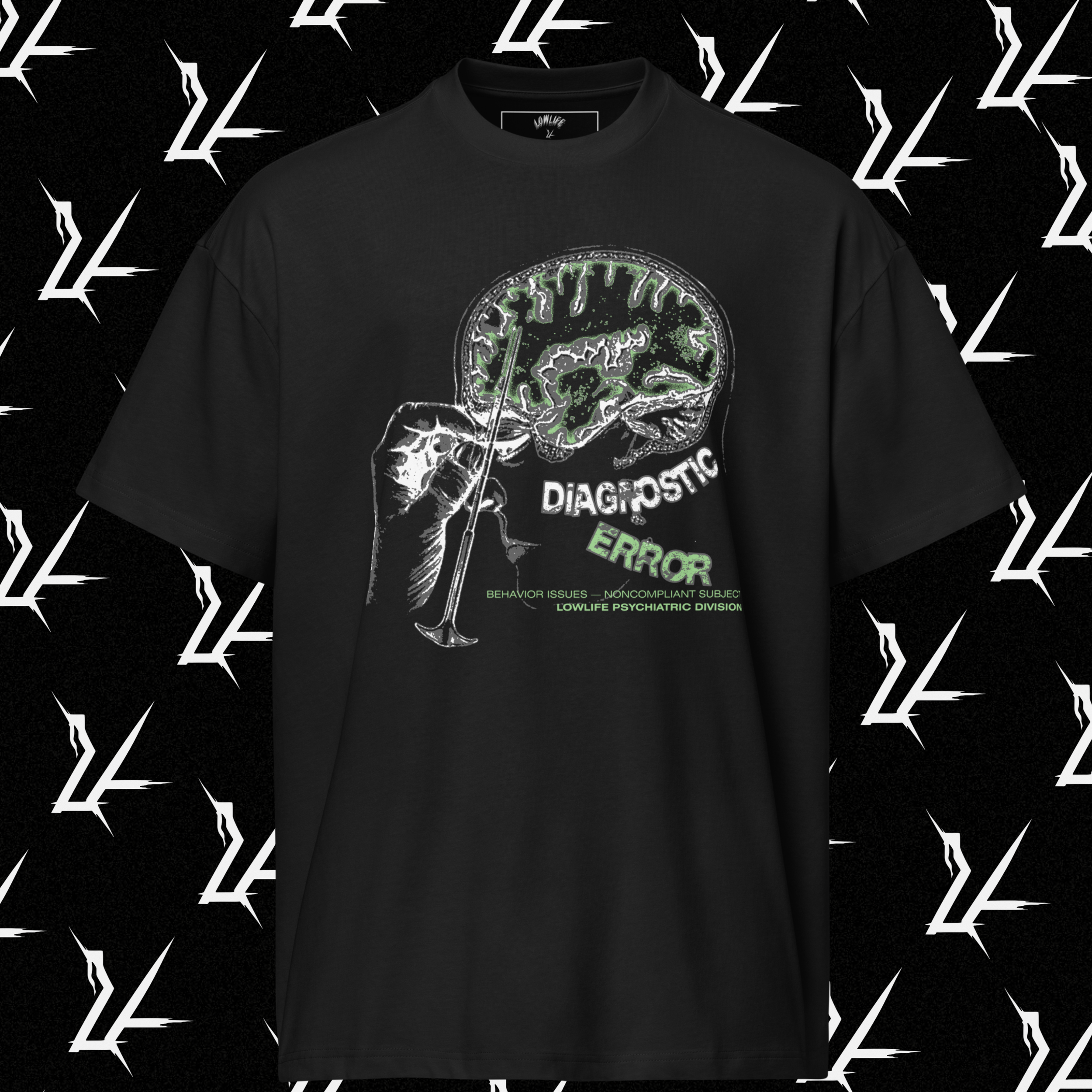
This was the first design created for the Behavior Issues Collection.
I wanted this one to be a statement piece. Something that grabs your attention and showcases the main theme of the collection without giving too much away.
After all, this is our first collection. I knew it wouldn't be perfect, but I wanted to use it to set a precedent for what our supporters should expect from LOWLIFE in the future:
Designs that are unapologetically bold, but carry a message with them.
“Shock and awe with flavor,” as I like to think of it.
The design was inspired by an old diagram of a lobotomy.
WHAT'S A LOBOTOMY?
A lobotomy was an old medical procedure that was used on patients in mental hospitals, particularly during the early and mid-1900s.
The goal was to sever the connections between the frontal lobe—the part of the brain associated with things like personality and emotional regulation—and the rest of the brain.
One of the most infamous methods involved doctors inserting a thin, ice pick like instrument through the bone above the eye socket.
The results could be dramatic.
Changes to personality.
Changes to emotional regulation.
Changes to brain function.
Permanent changes.
And these changes were often made without the person's consent.
It's a pretty gnarly thing to look at. It's even more disturbing when you think about how many people underwent the procedure.
Tens of thousands of people in the United States received lobotomies.
The procedure could leave a person calm and docile enough to be released from the hospital.
But the person who walked out wasn't necessarily the same person who walked in.
Their personality could be changed. Their emotional life could be changed. Their ability to function could be changed.
Who they were could be changed.
And that's what interested me.
Not just the procedure itself, but what it represents.
A person doesn't fit into the system.
They're difficult to understand.
They're difficult to control.
They won't change themselves to fit the expectations placed on them.
So the system changes them.
It resets them.
They didn't fit in.
They wouldn't change.
So the system reset them.
NEURAL MISALIGNMENT
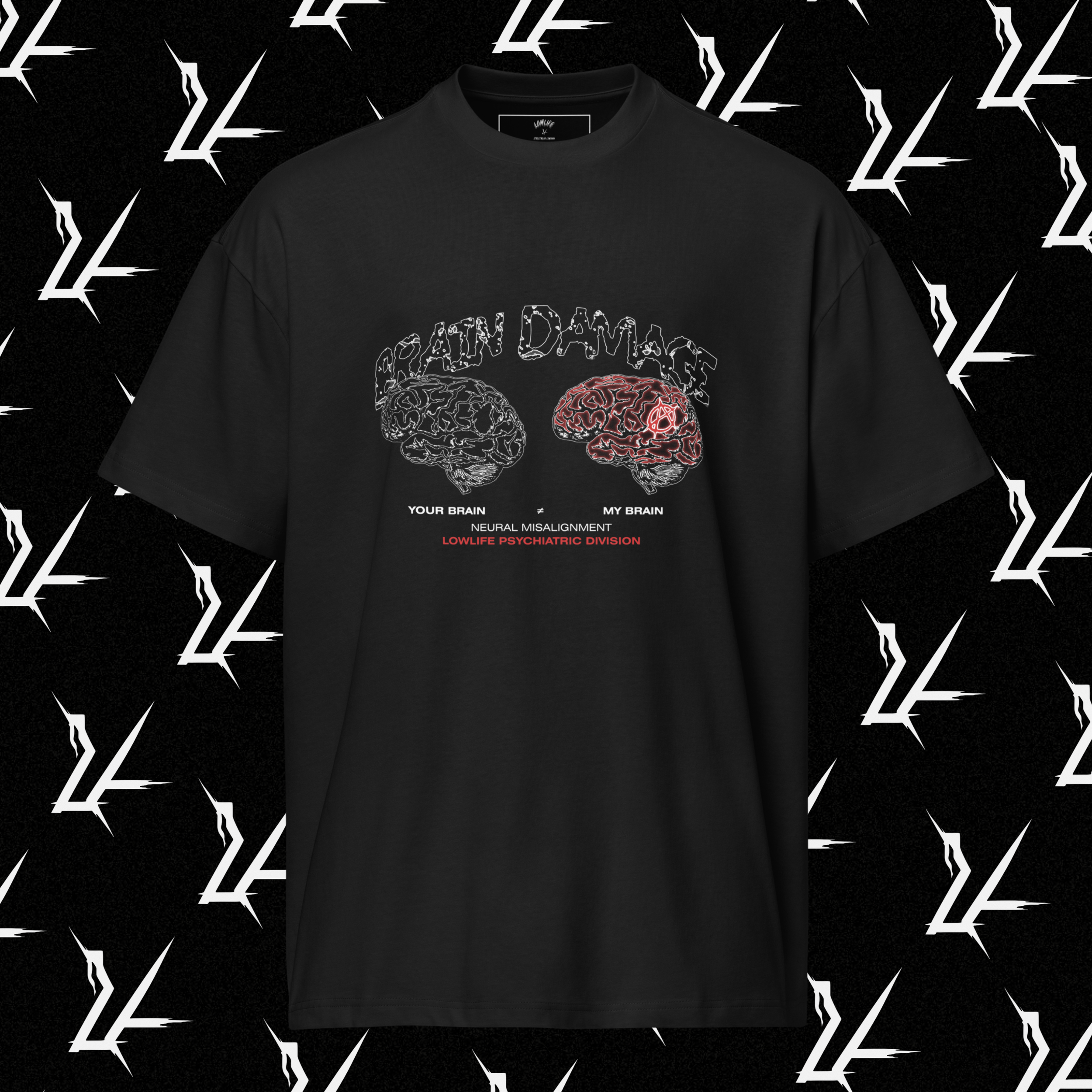
This design was inspired by my own personal experiences growing up.
I always felt like I was different from most of the people around me.
Throughout my school years, I had small friend groups that came and went over the years. I was never popular, but I wouldn't call myself a loner either.
Even with my friends, though, I often felt like there was some kind of invisible rift between myself and them.
We could be standing only a few feet away from each other, having a conversation, but to me it sometimes felt like shouting from one side of a canyon to someone on the other.
There was also a lot that I saw people do that simply didn't make sense to me at the time.
I still feel that way sometimes, even as an adult.
That feeling wasn't exactly helped by the comments I frequently heard from other people. They weren't always outright insults. Sometimes they were just observations that were...rudely put.
“You're weird.”
Heard that one a lot as a kid.
“You talk white.”
Whatever that means.
“Just be normal.”
Heard that one recently.
And then there was:
“Who made you like this?”
That last one was the most important.
Because eventually, I started asking myself the same question.
When I was younger, I genuinely thought there was something wrong with my brain.
I imagined there was something in my head that wasn't supposed to be there. Something physical. Something tangible. Something I could point to that would explain why I felt the way I felt.
Something that would explain why I was “weird” for doing things that, from my perspective, seemed completely normal.
I wanted there to be an explanation.
So I tried to express that feeling through this design.
Two brains.
One doesn't match the other.
One is normal.
One isn't.
It's a metaphor for how I sometimes feel when I'm around most people.
Not that one brain is better than the other, but that they’re just…different.
Your brain.
Versus.
My brain.
NEURAL MISALIGNMENT
UNFIXABLE
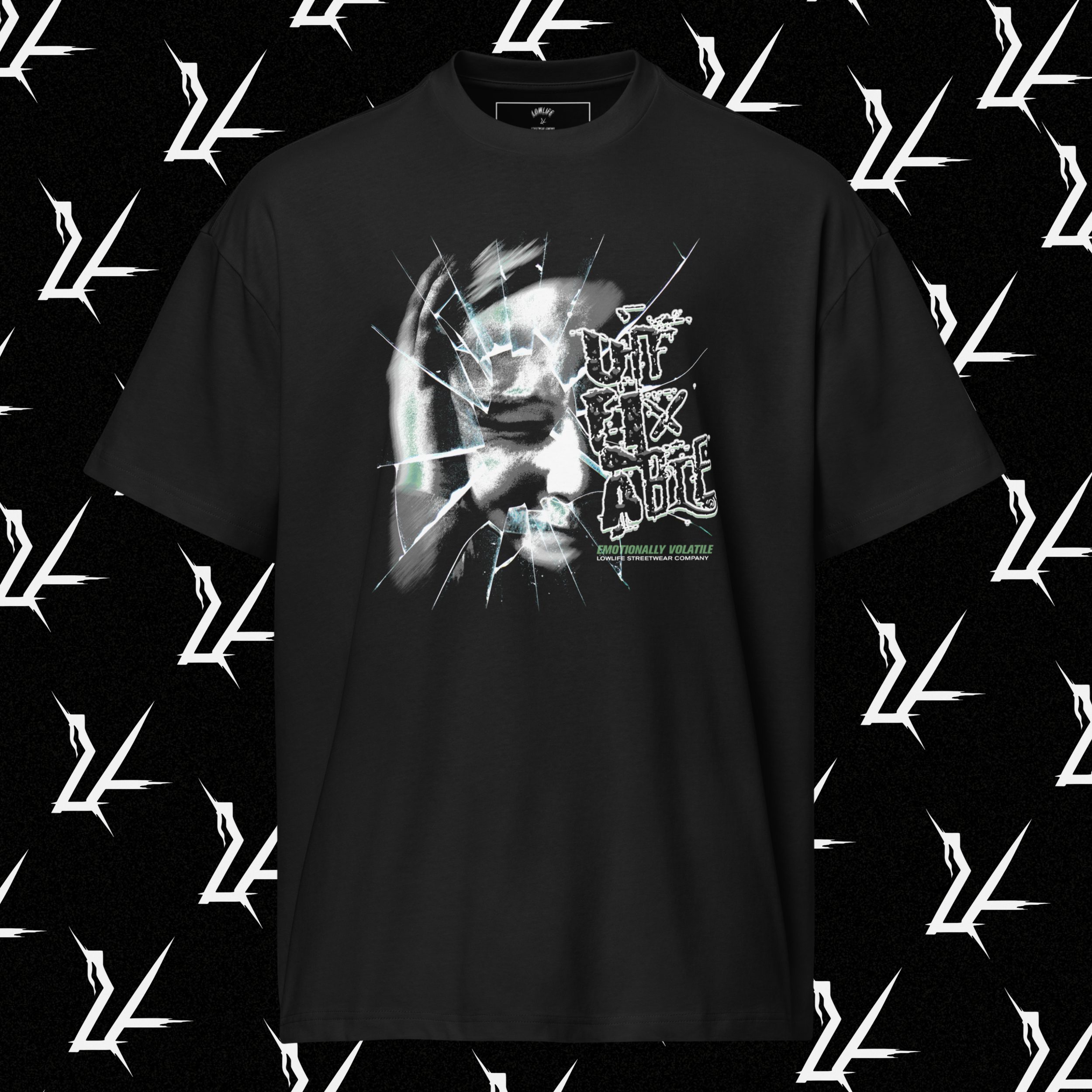
This is my least favorite design.
Yes, I said it.
I, Lawerence Linton—the man who put this design on a shirt, the man who's giving it away as a contest prize, the man who's intending to sell it—don't like a piece from my own collection.
The reason I don't like this design is because I don't like what it reminds me of.
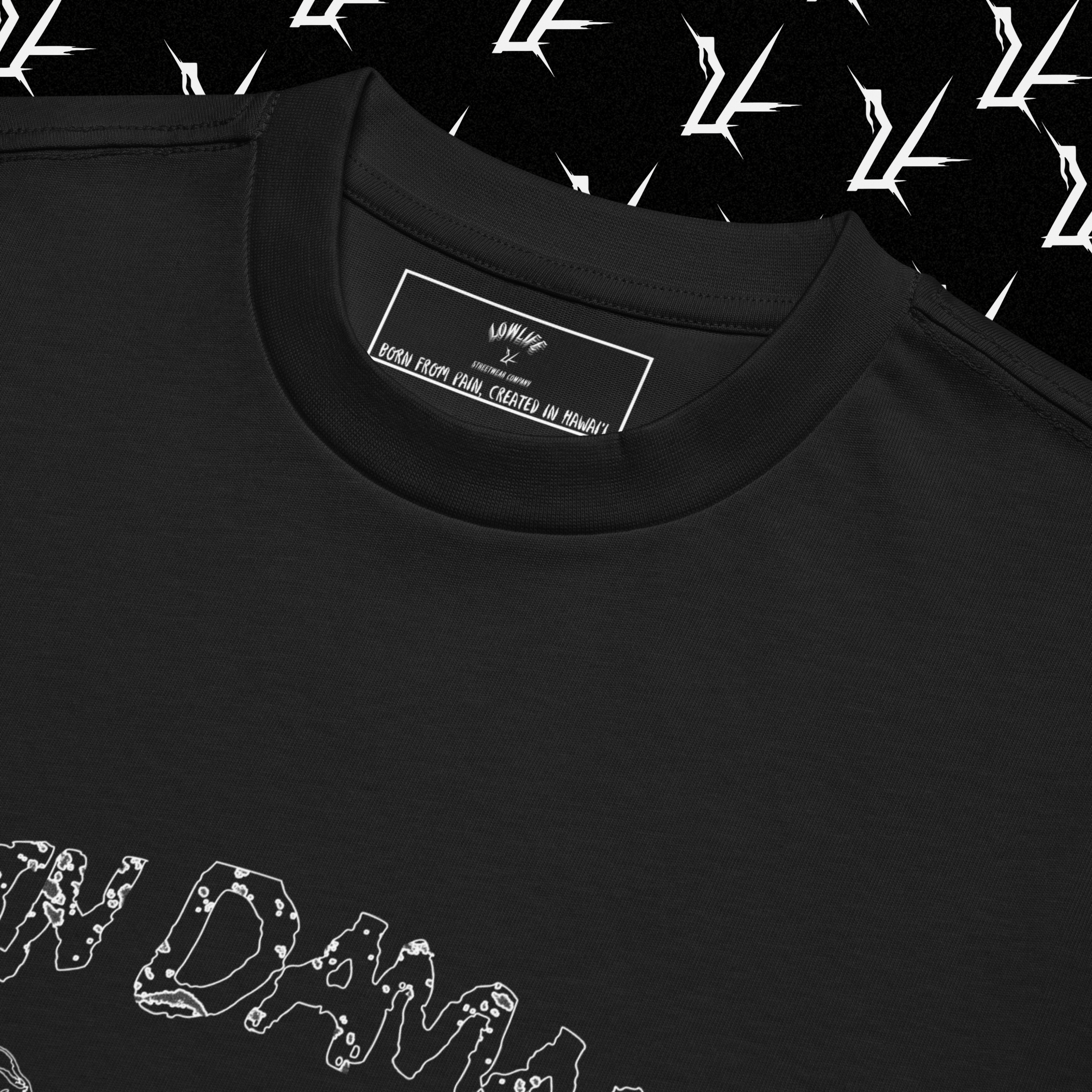
“Born From Pain, Created In Hawaii.”
Anyone who's been around LOWLIFE knows that's printed on the inside of all of our shirts.
It's there because it's true.
This design was inspired by my own pain.
Pain that comes from anger.
Anger that comes from loneliness.
Anger that comes from frustration.
Self-doubt.
Insecurity.
Regret.
And all the experiences I've had that showed me just how destructive these feelings can become when they're bottled up for too long.
In the Army, I often heard people say:
“Laugh so you don't cry.”
For me, it was always more extreme than that.
I'm not afraid to admit that I'm a very emotional person.
I may not seem like it, but it's true.
Words cut me like a razor blade taken to a piece of paper.
I don't mind admitting this because I know what it's like to be numb.
To not feel anything at all.
Good or bad.
Trust me when I say that it's far better to take the bad emotions with the good ones than to feel neither just to protect yourself from the bad.
At least an emotional person can feel joy, love, and happiness.
A numb person can't.
The problem with being emotional comes when you feel a lot.
When you feel intensely.
But you can't get it out.
I've been there before, and it's not only lonely. It's destructive.
The feelings don't disappear because you hold them in.
The deeper you push them down, the more they pressurize.
More and more.
Increasing in force.
Until...
BOOM.
And when that happens, it doesn't only hurt you.
It hurts the people around you, too.
People who may have done nothing wrong.
People you care about.
Caught in the blast with you being the bomb it came from.
That's why I'm constantly talking about expressing yourself and being brutally honest.
Love Over Wealth. Live In Full Expression.
That's what LOWLIFE means.
It's an acronym, but it's also the philosophy behind why I make this stuff in the first place.
I don't want people to bottle everything up until there's nowhere left for it to go.
I want people to express themselves.
Say what they mean.
Create something.
Talk to someone.
Scream if they need to scream.
Whatever it takes to get what's inside of them out before it turns into something destructive.
If you don't take anything else away from this article, take this quote with you in case you ever need it.
I hope you never do.
“It's better to shout than to explode, cause one disrupts and the other destroys.”
— Lawerence Linton
Fun fact: Hawaiian pizza (pineapple on pizza) isn’t actually Hawaiian.
THE COMMUNITY
Why should you give a fuck about anything I said in this article?
You shouldn't.
This article was never trying to convince you to care about the art contest, LOWLIFE, or Behavior Issues.
The point of this article was to do two things:
Announce the official opening of submissions to the Challenging Labels Art Contest.
Give some background on what the artists who enter have a chance to win.
If you don't care, then you don't care.
If you just want to win the $100 prize from the contest, I don't blame you.
If you're here just to watch how badly I fuck this entire thing up and watch LOWLIFE gradually decay into nothingness, then that's perfectly fine too.
I'm not the type of person who likes being told what to do.
So I won't tell you what to do.
Besides, if you don't care anyway, why not stick around to watch what will certainly be the most entertaining shit show to debut on the internet since Fyre Festival?
Admission is free.
But if you do care...
Consider yourself part of a family.
Consider you and I related.
Consider yourself one among many, a number that grows every day.
That is the LOWLIFE community.
Because at the end of the day, that's what my vision for LOWLIFE is.
Not a clothing brand.
Not a blog.
A community.
A community of people who come together in the name of self-expression.
The clothes are just one tool to build it with.
The LOWDOWN is another.
The art contest is another.
The gallery will be another.
Everything LOWLIFE creates is ultimately a means to the same end:
giving people a place to express themselves.
That's the vision.
And if you're here for it, welcome to LOWLIFE.

The band, Saydie, rocking Behavior Issues in Seoul, South Korea
THE CHALLENGING LABELS ART CONTEST
IS
